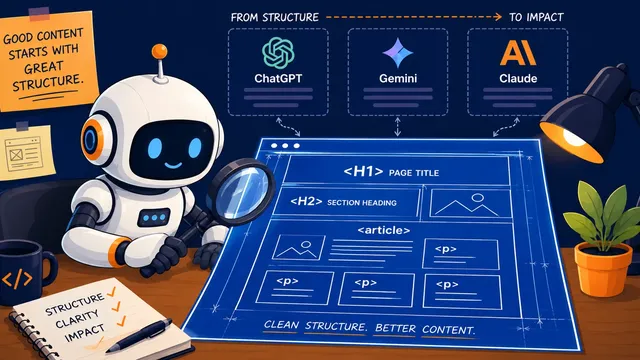
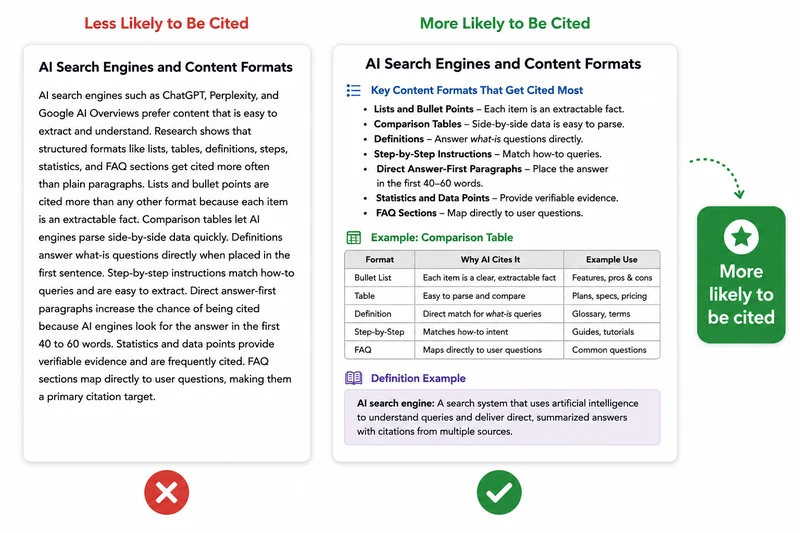
AI search engines do not read pages like humans do. They scan for extractable structures that map cleanly to the user's question. Content written as flowing paragraphs often gets skipped, while the same information presented as a list, table, or definition earns a citation. This article explains which formats AI engines cite most and how to use them.
Research across ChatGPT, Perplexity, and Google AI Overviews shows that structure determines citation probability more than word count. A HubSpot-AEO study found that over half of all citations come from structured formats. An answer buried in a dense paragraph is hard to extract, while a clear list or table becomes a direct quote candidate.
Lists and Bullet Points
AI engines cite bullet and numbered lists more than any other format. Qvery analysis shows listicles make up about 46 percent of classifiable citations. Lists break complex information into discrete extractable units. Each item acts as a standalone fact the model can pull into an answer without rewriting the surrounding context.
Use bullet lists for criteria, features, and pros and cons. Use numbered lists for steps, rankings, and sequences. Keep each item to one clear idea and aim for five to seven items per list. Place the list after a descriptive heading that matches the user question. Bold the key term in each item to reinforce the semantic anchor.
Comparison Tables
Tables let AI engines parse side-by-side data quickly and cite specific cells or rows. Conbersa research found that tables reach an 81 percent extraction rate compared to 23 percent for the same data in prose. A comparison table covering price, features, and pros weighs heavily in commercial and evaluative queries.
Keep tables focused on one comparison axis per column and use clear header rows. Avoid merged cells that confuse parsers, and add schema markup so the model understands the structure. Wrap wide tables in an overflow container to preserve data on mobile without breaking the layout for extraction.
Definitions and Glossary Entries
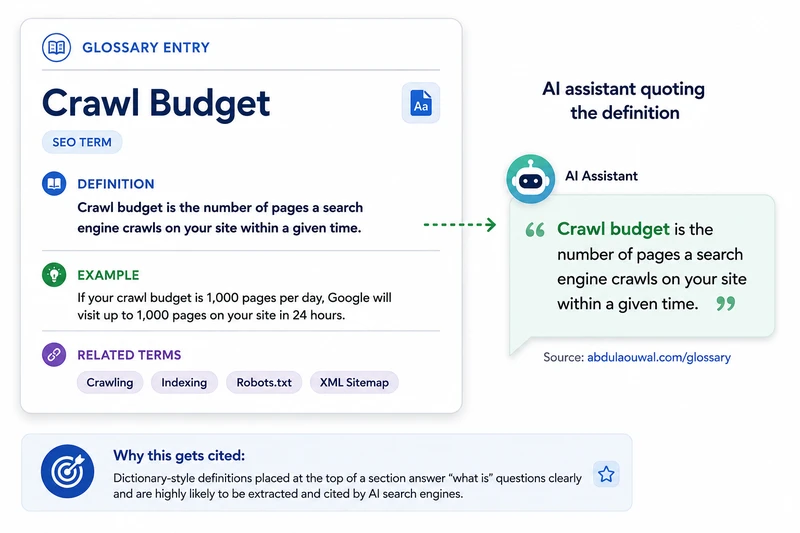
Dictionary-style definitions are among the most cited content types because they map directly to what-is questions. A definition in the first sentence of a section lets the AI extract a clean answer immediately. This pattern mirrors how ChatGPT and Perplexity structure their own responses to informational queries.
Put the term in the heading and the definition in the first sentence of the paragraph that follows it. Keep the core definition under 40 words so the model treats it as the complete answer. Front-load the answer into the first third of the page, since a large share of citations come from the opening section.
Step-by-Step Instructions
How-to queries trigger heavy fan-out, and step-by-step content earns citations by matching that structure. Numbered steps give the AI a clear sequence to extract and paraphrase. Each step should be a single actionable command with its result, so the model can cite the full process without guessing at missing context.
Lead with a one-sentence summary of the outcome before the steps begin. Use numbered list markup for the steps rather than paragraphs, and add HowTo schema to signal the content type explicitly. Group related steps under H3 headings that mirror the common sub-questions users ask about the process.
Direct Answer-First Paragraphs
AI engines truncate extraction after matching a heading to a question. If the answer does not appear in the first 40 to 60 words, the model moves on to another source entirely. Question-format headings are extracted over three times more often for AI Overviews than generic labels on the page content.
State the answer in the first sentence using the exact phrasing of the likely question. Follow with supporting evidence and data that strengthen the claim without burying it. Keep the answer block free of links, images, and introductory filler that could interrupt extraction before the model captures your key point.
Statistics and Data Points
AI engines frequently cite specific numbers because they provide verified, quotable evidence for answers across many query types. A statistic with a clear source carries more citation weight than a generic claim on the same topic. Linked statistics act as a trust signal, and adding two or three per page gives a measurable visibility boost.
Place each statistic in its own sentence with the source named inline for verification and trust. Bold the number and its context so the model identifies it as a quotable data point during extraction. Link the source so the AI can verify the claim, and update figures regularly since recency is a citation factor.
FAQ Sections
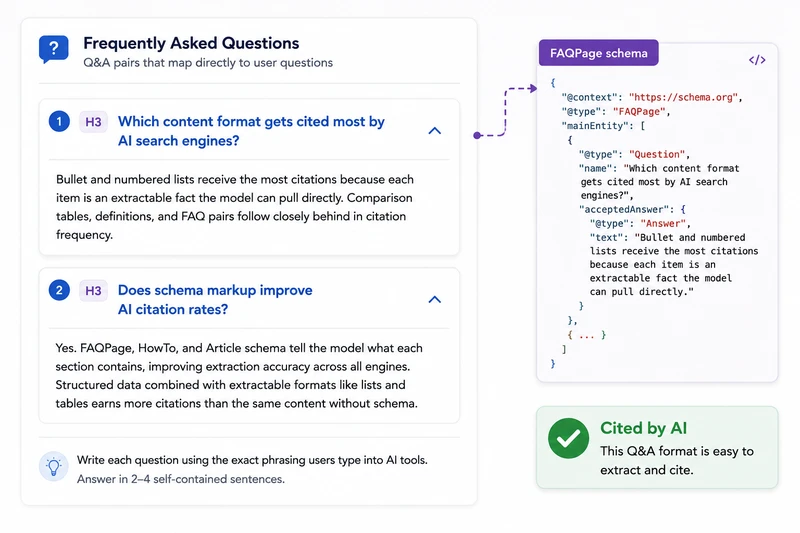
Question-and-answer pairs map directly to user prompts, making FAQ content a primary citation target. Pages with FAQ and HowTo schema are cited noticeably more often than pages without them. The format requires no interpretation, so AI engines prefer it for direct answers and quick extraction.
Write each question using the exact phrasing users type into AI tools. Answer in two to four self-contained sentences without internal links that truncate extraction. Add FAQPage schema and group related pairs under descriptive H2 headings. Avoid generic questions that no user would actually ask an AI assistant.
Frequently Asked Questions
Which content format gets cited most by AI search engines?
Bullet and numbered lists receive the most citations because each item is an extractable fact the model can pull directly. Comparison tables, definitions, and FAQ pairs follow closely behind in citation frequency. These structured formats let AI engines quote content without rewriting the surrounding context.
Are long-form paragraphs bad for AI citations?
Not inherently, but dense paragraphs hide the answer. AI engines truncate extraction after a matched heading, so an answer buried in a long paragraph is often missed. Opening with a direct answer and using lists or tables for supporting detail improves citation likelihood.
Does schema markup improve AI citation rates?
Yes. FAQPage, HowTo, and Article schema tell the model what each section contains, improving AI citation accuracy across all engines. Structured data combined with extractable formats like lists and tables earns more citations than the same content published without schema markup.
Should I rewrite content into these formats?
Prioritize pages that target evaluative, comparative, and commercial queries, since these trigger the deepest fan-out. Convert dense paragraphs into lists, tables, and definitions on your highest-value pages first. Content answering simple factual queries needs the least reformatting to earn citations.
What structured data helps AI search engines cite my pages?
Article schema signals the content type and metadata to the model. FAQPage schema tells it that question-answer pairs are present. HowTo schema marks up step-by-step instructions, while Product and ItemList schema help commercial and list pages earn citations in evaluative queries.